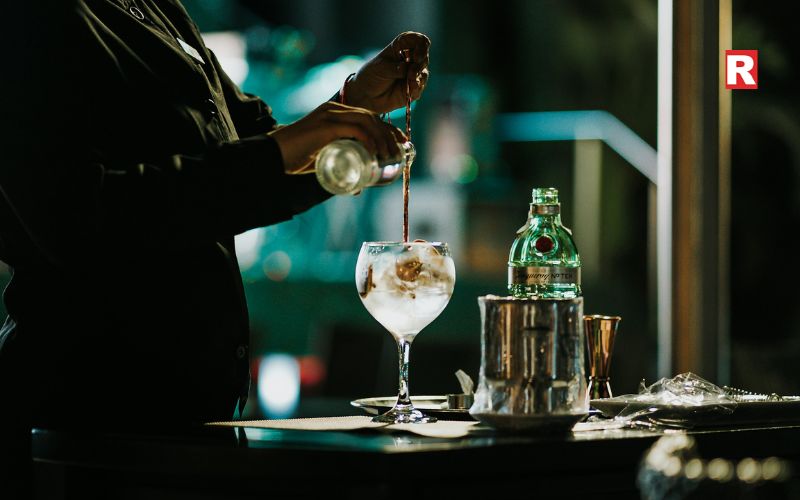
If cloud kitchens worked for biryani and burgers, why not cocktails? A delivery-only cocktail brand in India runs into a wall a delivery-only kitchen never has to deal with: alcohol is not food.
Every food founder we talk to right now has the same question in some form. If cloud kitchens worked for biryani and burgers, why not cocktails? The honest answer is that a delivery-only cocktail brand in India is a genuinely interesting model, but it runs into a wall that a delivery-only kitchen never has to deal with: alcohol is not food, and India does not treat it like food.
This piece looks at what a dark kitchen bar model actually means, why the category is growing anyway, where the licensing reality bites, and how to build a menu around it if you decide to move forward.
What Is a Dark Kitchen Bar Model?
A dark kitchen bar takes the cloud kitchen playbook, no dining room, no walk-in footfall, orders placed entirely online, and applies it to a beverage-led menu instead of a food menu. There is a central production unit, usually shared with an existing licensed kitchen or restaurant, and the brand exists almost entirely on delivery apps or its own ordering page.
In markets like the US and UK, this model shows up as pre-batched cocktails sold direct to consumer, canned RTD (ready-to-drink) cocktail brands, and virtual bar brands that piggyback on an existing restaurant's kitchen. In India, the same demand exists, but the product on offer usually has to change shape before it can legally reach a customer's door.
Two things get lumped together under this idea, and separating them matters. One is a true delivery-only alcoholic cocktail brand, ordering a Negroni and having it arrive at your flat. The other is a mocktail, mixer, or low-and-no ABV cocktail brand that delivers everything except the alcohol, or ships a zero-proof product outright. Right now, the second model is the one that's actually scaling in India.
Why Delivery-Only Cocktail Brands Are Growing
Quick commerce habits are already in place, and once someone orders groceries in ten minutes, ordering a cocktail experience doesn't feel like a stretch. Home entertaining has grown since the pandemic, and hosts want bar-quality drinks without owning bar-quality equipment or spirits knowledge. India's ready-to-drink beverage segment is growing fast, and industry estimates put the alcoholic RTD category on a double-digit annual growth path through the second half of this decade. Low and zero-ABV drinking occasions are rising among younger, health-conscious urban consumers, which is exactly the segment a non-alcoholic dark kitchen bar can serve without touching excise law at all. And existing bars and restaurants already have licensed kitchens sitting idle in the afternoon, which makes a virtual bar brand a low fixed-cost way to add a second revenue stream.
The category is real. What's growing fastest inside it, though, is not what most people picture when they hear delivery-only cocktail brand.
Legal & Licensing Challenges in India
This is the section most content on this topic skips, and it's the one that actually decides whether your idea is a business or a legal problem waiting to happen.
Alcohol is a state subject in India, and e-commerce sale of alcoholic drinks is prohibited in most states. Home delivery of liquor through apps is currently operational only in a handful of states, primarily Odisha and West Bengal, where licensed retailers deliver through partnerships with platforms like Swiggy. Several other states, including Delhi, Karnataka, Punjab, Tamil Nadu, Goa and Kerala, have discussed or piloted the idea, but as of now the framework is either limited, paused, or not fully operational.
Delhi amended its excise rules to allow home delivery under a new L-13 licence, but the provision has not been fully operationalised across the market. Maharashtra and Karnataka allow some retailer-led delivery within tight radius and timing restrictions, not open marketplace delivery of mixed cocktails. A cocktail is not a bottle of spirit: delivering a pre-mixed drink containing alcohol crosses into manufacturing and packaging rules that go well beyond a standard bar or retail liquor licence. And interstate delivery of alcohol is not permitted, so a brand cannot centrally produce and ship pre-mixed alcoholic cocktails across state lines the way a food brand ships snacks.
This is why almost every credible dark kitchen bar concept we've seen in India actually operates one of three ways. It delivers the non-alcoholic half of the cocktail, mixers, garnishes, syrups, batched sours, with the customer supplying their own spirit. It sells a genuinely zero-proof RTD product that never touches excise law. Or it operates within a single licensed premises, delivering only within that outlet's own licence and delivery radius, the way a hotel bar might deliver to in-house guests.
If your concept assumes open, cross-city alcoholic cocktail delivery through Swiggy or Zomato today, that assumption needs to be tested against your specific state's current excise rules before a single rupee goes into branding or packaging.
Building a Menu for Delivery, Not Dine-In
A dine-in cocktail menu is built around theatre, the pour, the garnish, the glass, the moment it's handed to you. A delivery menu has to survive a bike ride and still taste right thirty minutes later. That's a different engineering problem, and it's one we work through with clients the same way we approach a physical bar menu, in our guide on Craft Cocktail Menu Design.
Favour drinks that hold structure without ice already in them, batched sours, spiced syrups, bittered mixers, shipped separately from any dilution. Avoid anything that separates, foams, or oxidises quickly, since egg white sours and delicate muddled herbs don't survive a delivery bag. Package in a way that lets the customer finish the last ten percent of the drink themselves, which is also what keeps the product legally a mixer or kit rather than a finished alcoholic beverage in most states. Keep the menu tight, since six to eight formats done well outperform twenty formats that all taste diluted by the time they arrive. And design for repeat weekly ordering, not one-off novelty, since the RTD and mixer category grows on subscription and habit, not single purchases.
Batch testing matters more here than in a physical bar, since there's no bartender adjusting a pour on the fly once the product has left the kitchen.
Is This Model Right for Your Brand?
It depends on what you're actually building. A dark kitchen bar model is a strong fit if you already run a licensed outlet and want a second, low fixed-cost revenue line from an existing kitchen, if your concept is genuinely non-alcoholic or low-ABV, or if you're building a mixer, syrup, or RTD product brand rather than a bar with a delivery arm.
It's a weaker fit if the entire pitch depends on delivering mixed alcoholic drinks across a city today, since the licensing framework in most states simply isn't there yet, or if your margins depend on delivery volume alone without a retail or on-premise anchor to fall back on while regulation catches up.
We've walked clients through this exact decision before building out a beverage program, most recently on projects like The Sip Society in Chandigarh, where the cocktail menu was engineered from day one to work both on-premise and as a retail-ready mixer line. If you're weighing a similar model, our guide on Mixology for Restaurants in India is a useful next read, and our Menu & Recipe Design service covers exactly this kind of format testing.
Before you commit capital to packaging and branding, it's worth checking the excise reality for your city against our Bar Licensing in India state-wise guide, and mapping the full cost picture using our F&B Consultant Cost in India breakdown.
FAQs: Dark Kitchen Bars
Weighing a Delivery-Only Cocktail Concept?
We test dark kitchen bar and RTD concepts against real state-wise licensing rules before you spend on branding.
Talk to The Bar Consultants