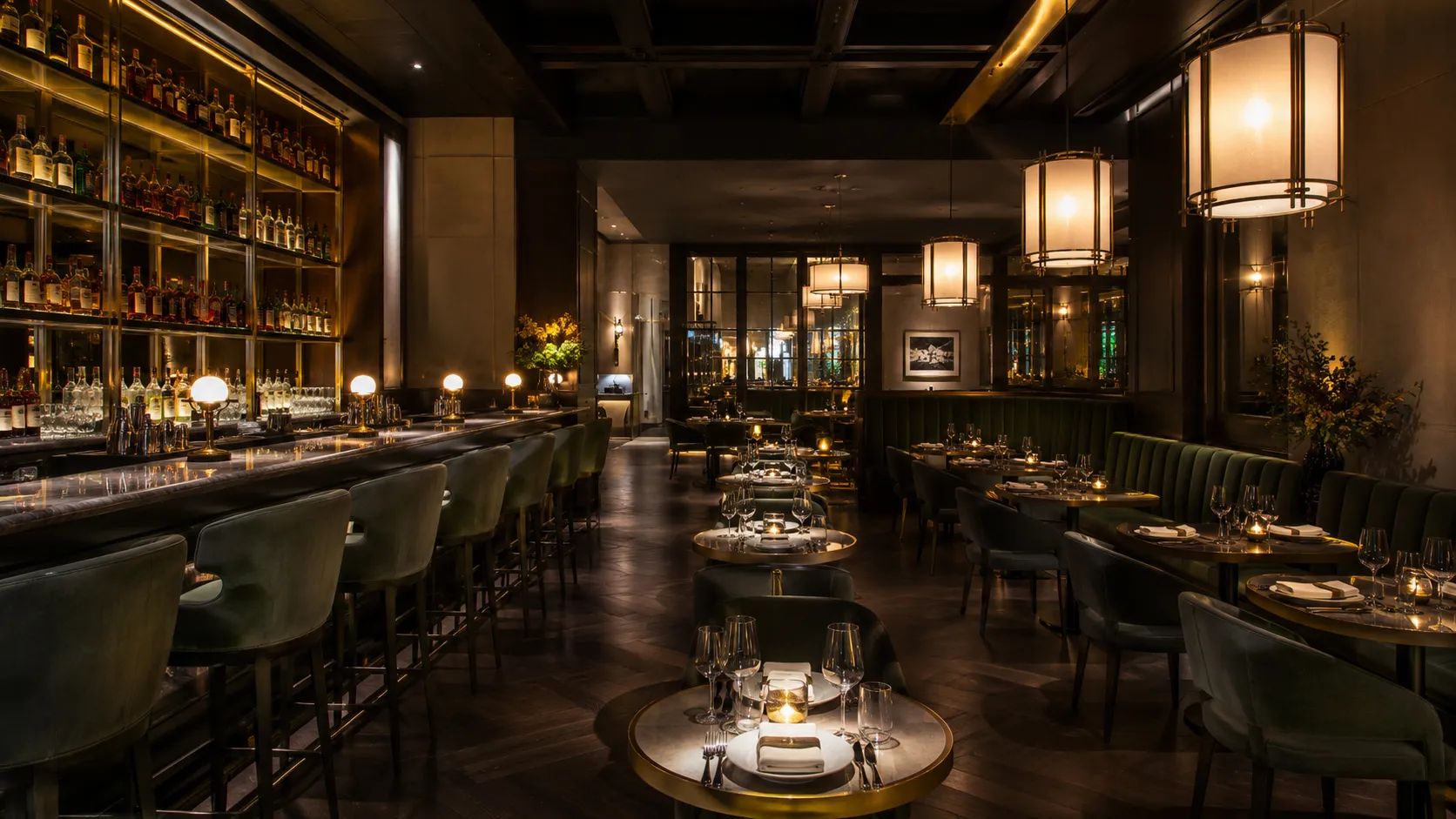
A rooftop bar in India has to survive two extremes most design references never account for: peak summer heat and a monsoon that comes sideways for weeks. Here's what actually holds up.
A rooftop bar in India has to survive two extremes most design references never account for. Peak summer heat that can push surface temperatures past what any imported furniture catalogue was tested for, and a monsoon that doesn't drizzle, it comes sideways for weeks. Design a rooftop the way it's done in Dubai or Bangkok and you'll be replacing furniture, repainting walls and patching leaks by the second year.
This guide covers what actually holds up on an Indian rooftop, where owners overspend, and the mistakes that quietly wreck a good rooftop concept before it gets a chance to work.
Why Rooftop Bars Are Booming in Indian Cities
Rooftop spaces solve a real estate problem most restaurateurs face in Indian metros. Ground floor commercial space with the footprint for a full bar is expensive and scarce, while rooftops on the same building often sit unused or underpriced in the lease negotiation.
There's also a guest-experience angle that indoor venues can't compete with. A skyline view or open-air seating is a draw on its own, before the menu or the cocktail list even enters the conversation. That's part of why cities like Mumbai, Gurugram, Bengaluru and Hyderabad have seen a steady rise in rooftop concepts over the last few years, even as ground-floor rents in the same micro-markets have stayed flat or fallen.
The catch is that a rooftop only earns that premium if it's usable for most of the year. A rooftop that shuts down for four monsoon months and gets uncomfortably hot for another two is running at half the trading days of an indoor venue in the same location.
Design Elements That Survive Monsoon & Heat
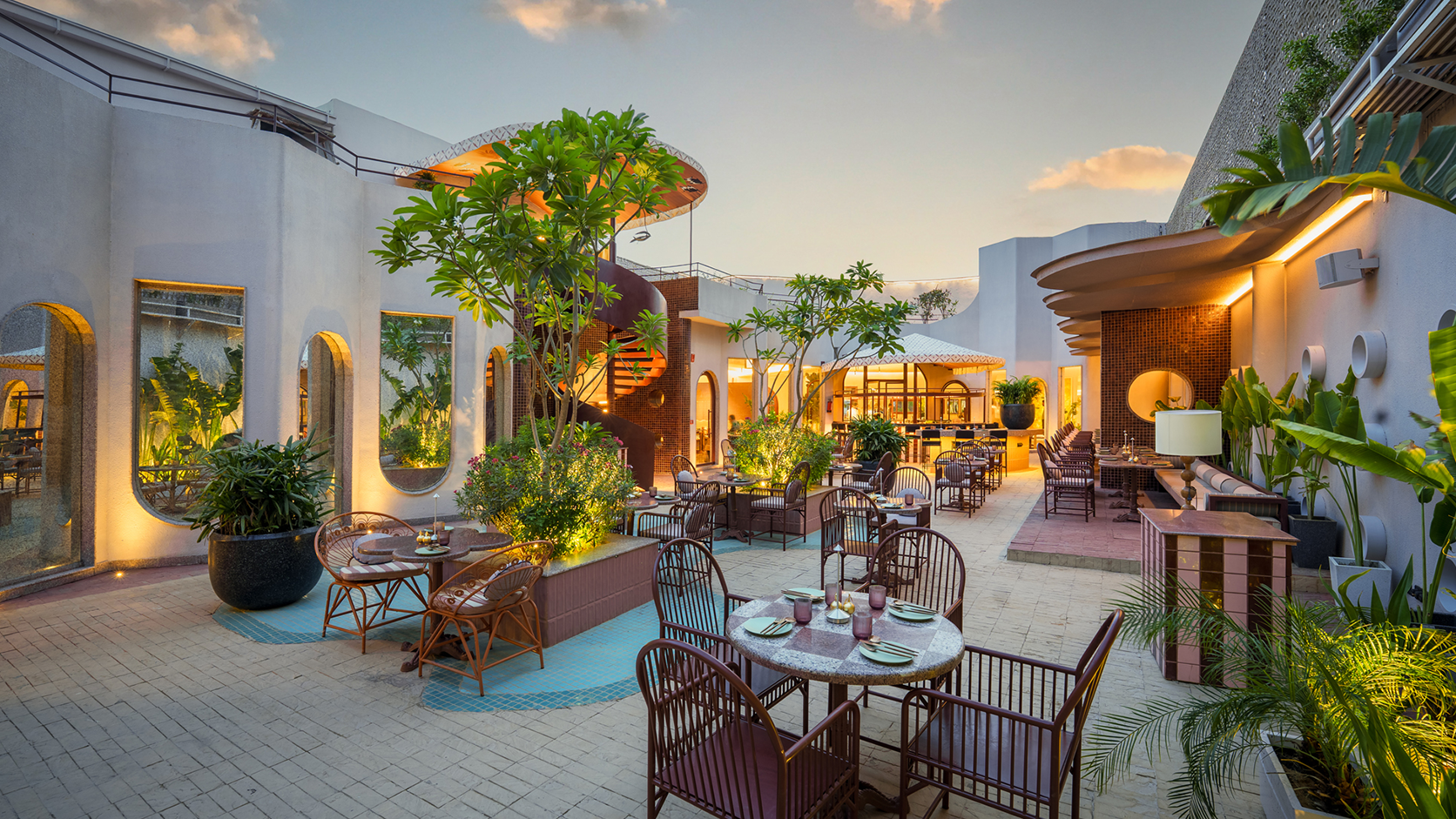
India isn't one climate, so the specifics shift by city, but a few material and structural choices hold up across most of the country. An operable louvre roofing over a fixed pergola opens for clear-sky service and closes fast when rain moves in, which matters more than any single material choice. Teak, powder-coated aluminium, concrete and natural stone are the materials to build furniture and flooring from, since untreated iron and low-grade steel rust within a single monsoon season and start staining the floor beneath them. A properly sloped and waterproofed deck, not a flat surface, matters because standing water after a heavy shower is what actually damages furniture and flooring over time, more than the rain itself. Deep overhangs or retractable awnings along the seating perimeter keep guests from being forced indoors the moment it starts drizzling. And UV-rated, quick-dry outdoor upholstery fabric holds up far better than indoor fabric moved outside, which fades and mildews within a season.
For hot months, cross-ventilation and shade planning do more than mechanical cooling ever will on an open rooftop. Misting fans help in dry heat but add to humidity in already-humid cities, so they're a better fit for Delhi or Jaipur than for Mumbai or Chennai.
Layout Tips for Small Rooftop Spaces
Keep the bar counter along the leeward side of the structure, away from the direction monsoon wind and rain typically hit, so service doesn't stall every time weather turns. Zone the space into a covered core and an open-air perimeter, so you can keep operating at reduced capacity during light rain instead of closing entirely. Plan service paths before seating layout, since a cramped rooftop with beautiful seating but no clear route from bar to table slows service far more than it would indoors. Use planters and low partitions instead of tall solid walls to break up small spaces without blocking the view guests are paying a premium for. And leave real clearance around emergency exits and fire equipment, since rooftop fire safety approvals are stricter than ground floor in most municipal codes, and layout mistakes here are expensive to fix after fit-out.
Lighting & Ambience That Works Outdoors
Outdoor lighting has to solve for both weather and mood, which indoor lighting plans don't usually account for. Use IP65-rated or higher fixtures for anything exposed to rain, even under a covered structure, since wind-driven monsoon rain reaches further than most people plan for. Warm colour temperatures between 2700K and 3000K read better against a night sky than the cooler white light that works fine indoors. Layer lighting across at least three levels: string or festoon lighting overhead, low-level path and step lighting for safety, and accent lighting on planters or feature walls. And avoid direct uplighting into guests' sightlines toward the skyline, a common rooftop mistake that undercuts the exact view the space is selling.
Sound needs the same weatherproofing thinking as lighting. Outdoor-rated speakers cost more upfront but avoid the recurring expense of replacing water-damaged indoor speakers every year or two.
Common Rooftop Design Mistakes
The mistakes we see repeatedly: specifying indoor-grade furniture because it's cheaper upfront, then replacing it within a year once the first monsoon hits; having no retractable or covered fallback option, which means a fully open-air design loses four to five months of usable trading days annually in most of India; underestimating structural load limits, since heavy bar counters, ice wells and full-service kitchens on a rooftop need a structural engineer's sign-off before design finalises, not after; ignoring drainage until the deck is already built, the single most expensive mistake to fix retroactively on a rooftop; and treating the rooftop like a photo backdrop first and a working bar second, resulting in a beautiful space that's genuinely difficult for staff to service efficiently.
Getting a rooftop concept licensed and operational involves the same excise and fire clearances as any other bar, sometimes with added structural approvals. Our guide on How to Set Up a Bar in India walks through that groundwork in detail.
Once the space is weatherproofed and licensed, the next question is what goes behind the bar. Our guides on Craft Cocktail Menu Design and Mixology for Restaurants in India cover building a beverage programme suited to the space.
And if the rooftop is part of a hotel property, our breakdown on Hotel Bar Profitability looks at how seasonal outdoor capacity affects the wider F&B numbers across a property.
FAQs: Rooftop Bar Design
Design a Rooftop That Trades Year-Round
We help owners weatherproof, license and lay out rooftop bars built for Indian conditions.
Talk to The Bar Consultants